Beat the Reversi AI! Intermediate Tactics from Book Openings to Parity
Published
Smartphone apps let you easily challenge the CPU in Reversi, but casually flipping discs often leads to trouble from the midgame onward, making the CPU hard to beat. First, let us master basic opening phase tactics.
Opening Phase Book Openings and Avoiding Dangerous Squares
In the opening phase, there are established book openings with set move sequences, such as the "Rabbit", "Tiger", and "Cow". Knowing these lets you build your game without losing form early on.
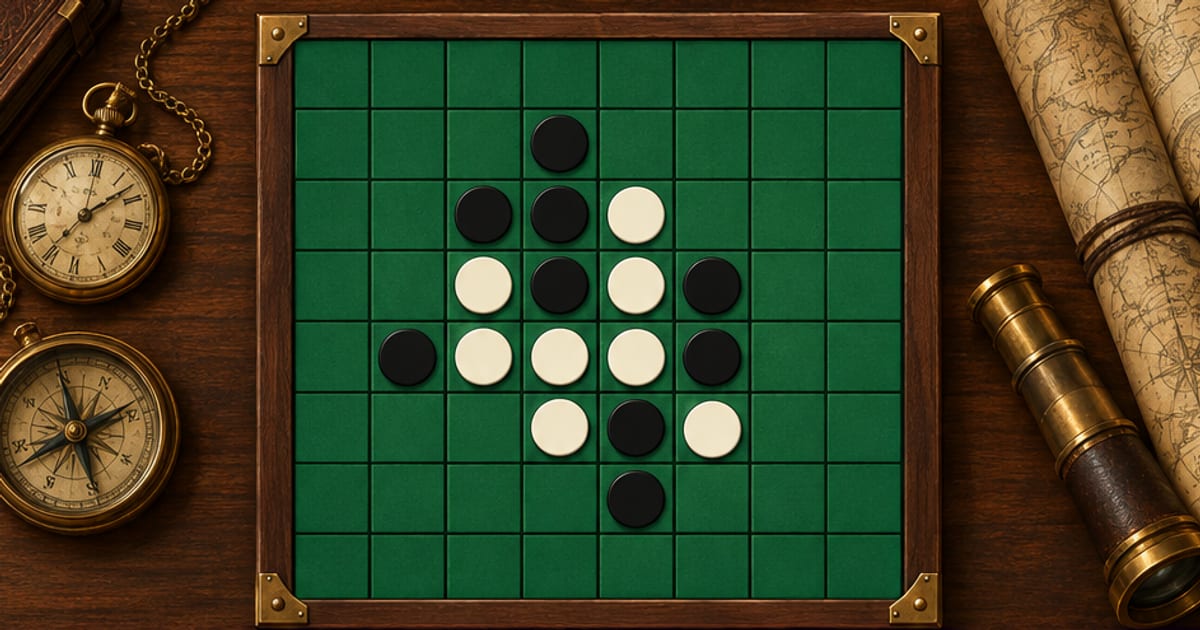
Figure 1 as text
Black discs (6): c3 e4 c5 d5 e5 f5
White discs (3): d3 d4 d6
To move: White
Risky squares: b2
Board (from rank 1): ......../......../..BW..../...WB.../..BBBB../...W..../......../........
Carelessly playing into an X-square diagonal to the four corners or a C-square along an edge can let your opponent claim a corner, which once taken cannot be flipped back. In this board position, if White plays b2 on the X-square, Black can take the a1 corner next. Avoid these dangerous squares carefully until the midgame.

In the Midgame, Avoid Flipping Too Many Discs to Keep Options Open
In the Reversi midgame, flipping too many discs at once puts your discs on the outer edge of the board, giving your opponent many squares to play. To raise your win rate, restrict your opponent's choices while maintaining your own mobility.
When deciding a move, aim for low openness moves that flip discs adjacent to fewer empty squares. Flipping mainly interior discs lets you maintain the position without offering footings for the opponent.
- Keep flipped discs to a minimum to avoid expanding the opponent's mobility.
- Prioritize interior discs with low openness to avoid spreading outward.
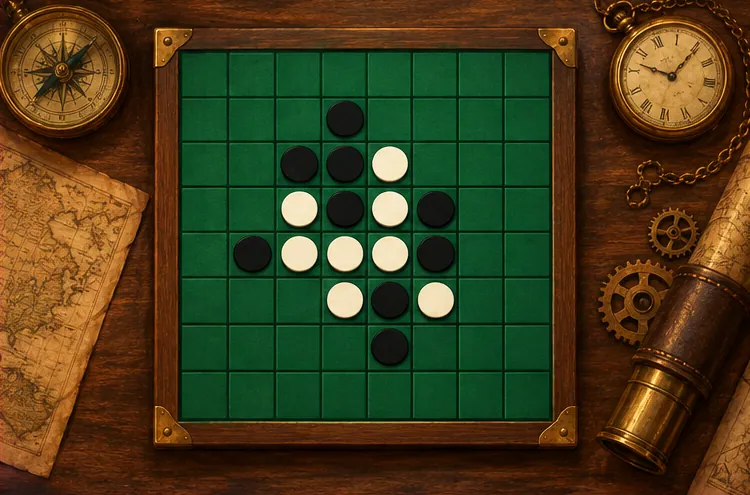
Figure 2 as text
Black discs (4): c4 e4 e5 f5
White discs (4): d3 d4 d5 d6
To move: Black
Key squares: c5
Board (from rank 1): ......../......../...W..../..BWB.../...WBB../...W..../......../........
In this diagram, Black plays c5, limiting flipped discs to 1. Choosing such an inward move instead of expanding outward keeps the footings given to your opponent to a minimum.
Play in the app
The fastest way to absorb these ideas is to try them in a game. Play through to the end against an on-device AI even without reception.


Endgame Parity: The Concept That Decides Victory
In endgame positions, empty squares increasingly split into separate regions. Here, the foundational concept deciding victory is parity.
Play first into an odd region to aim for playing the last move there yourself. Conversely, entering an even region yourself lets your opponent take the last move, giving them many stable discs. Keeping this principle in mind during CPU matches in Reversi will help you close out the endgame steadily.
Improve Using App Matches and Game Review
To hone judgment in real matches, reviewing games with a smartphone app is very helpful. The Reversi app Patent War features an on-device AI, allowing you to tackle Reversi CPU matches calmly even offline.
After a match, replay the transcript and access free AI analysis online to objectively inspect mistakes. Reviewing midgame disc management and endgame move orders fosters steady improvement.
Frequently asked questions
How should I react if play diverges from book openings early on?
Focus on not giving away corners and keep the number of flipped discs low. Careless moves to an X-square or C-square make it easy for the opponent to take a corner. Also, choose low openness moves that flip few discs bordering empty squares, concentrating on interior discs to restrict your opponent's mobility toward the midgame.
In what board situations does parity fail to hold?
Situations where either player runs out of moves and a pass occurs. Parity assumes players alternate turns to play the last move in a region. If a pass occurs midway through, the turn order reverses, disrupting calculations based purely on whether empty squares in a region are odd or even.
What exactly is a move with low openness?
It is a move that flips discs adjacent to very few empty squares. Flipping many discs that touch outer empty squares provides new footings and increases the opponent's mobility. Prioritizing interior discs already surrounded by other discs helps restrict their options while keeping your own squares open.
Play in the app
Explore a steampunk world with the Reversi app Patent War. Matches and journeys with AI start for free.